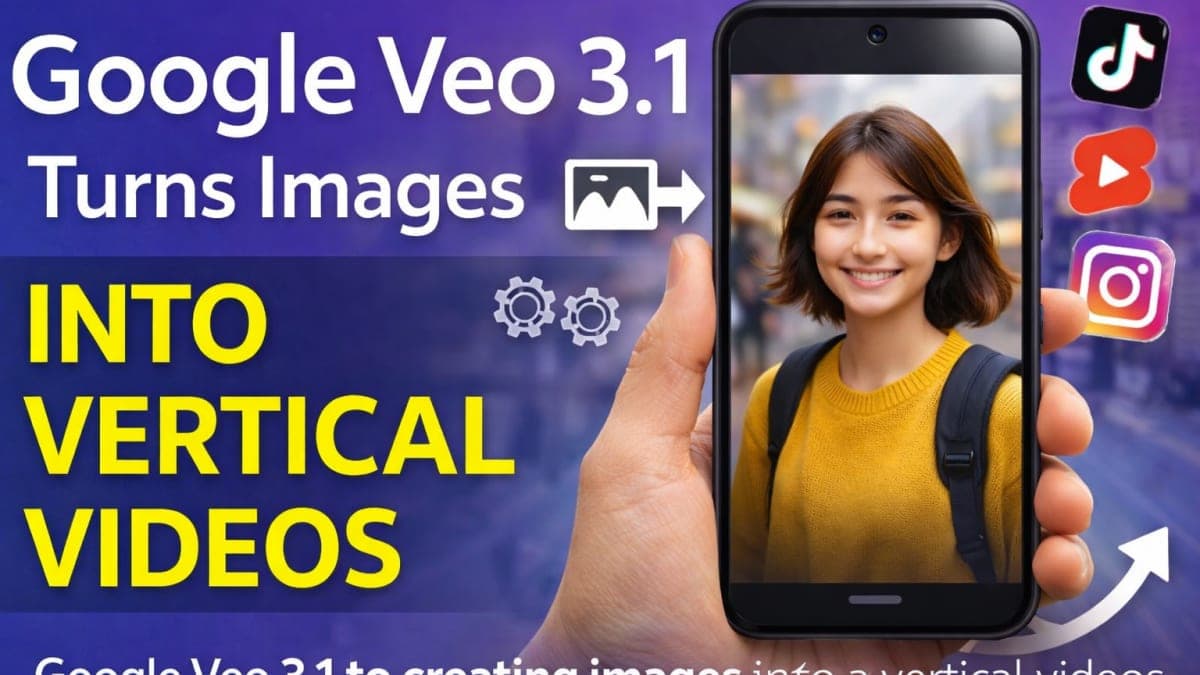
Google Veo 3.1 Turns Images Into Vertical Videos With Better Consistency
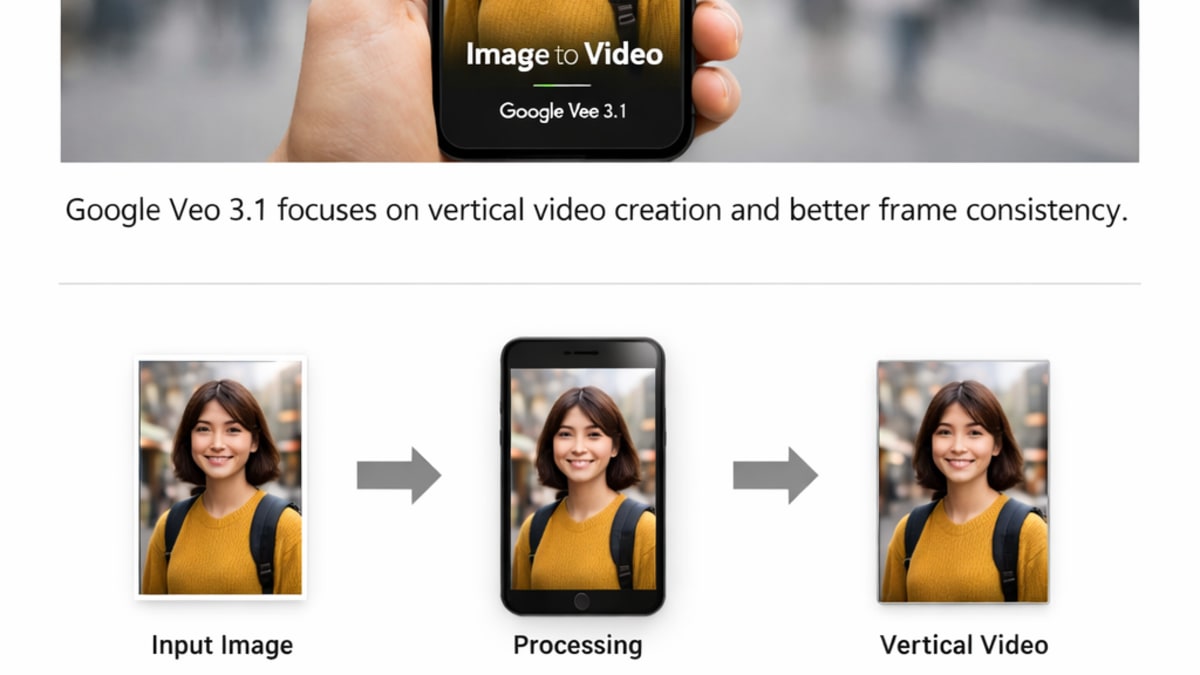
But once you actually look at what changed, it becomes clear that this update matters more than it seems.
Google Veo 3.1 is not just another version number. It reflects a shift in how Google thinks about video creation today. Less about cinematic visuals. More about speed, vertical screens, and images doing most of the work.
And most importantly, it finally fixes one of AI video’s biggest problems: consistency.
Why Google Veo 3.1 Feels Different
At first glance, Veo 3.1 might look like a small update. It still turns text and images into video. That part hasn’t changed.
What has changed is the focus.
Earlier versions of Veo leaned heavily toward wide, movie-style video generation. Veo 3.1 clearly prioritizes vertical formats and image-based input. That alone tells you who this tool is really for.
Creators on TikTok. Reels. Shorts. People working with phones, not film sets.
With Veo 3.1, a single image can now become a vertical video that actually holds together. Motion feels smoother. Faces stay recognizable. Scenes don’t fall apart halfway through.
That might sound basic, but in AI video generation, it’s a real breakthrough.
Turning Images Into Vertical Videos That Make Sense
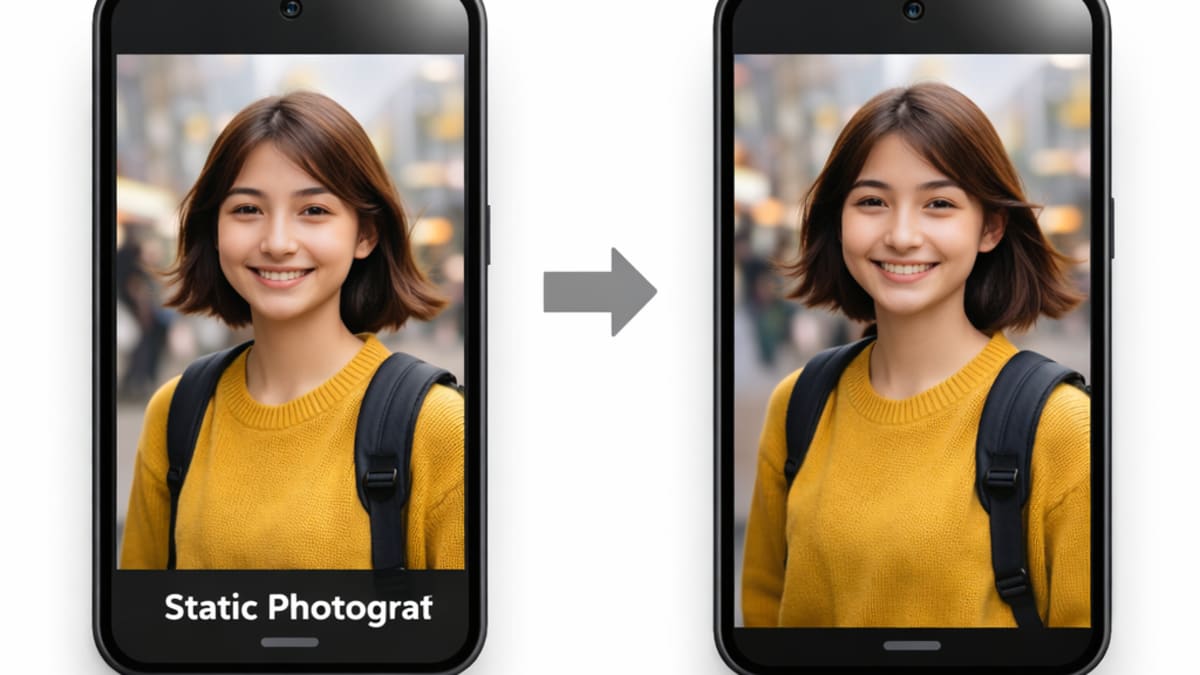
Faces warped. Backgrounds shook. Objects changed shape. The video technically moved, but it didn’t feel real.
Veo 3.1 improves this by treating an image like a scene instead of a flat picture.
When you upload an image, the model looks at:
- Where the main subject is
- How deep the scene feels
- What belongs in the background
- How motion should happen
The movement is subtle, not chaotic. A slight posture shift. Gentle motion in hair or clothing. A bit of depth in the background.
These small details make the video feel alive without being distracting.
For photographers, designers, bloggers, and e-commerce sellers, this is especially useful. Many already have strong images but very little video content. Veo 3.1 lets them reuse what they already have.
One good image can now become multiple vertical videos across platforms.
Consistency Is the Real Upgrade
If there’s one thing that defines Veo 3.1, it’s improved consistency.
AI video has always struggled here. Faces subtly changing. Products shifting color. Objects disappearing between frames. Viewers notice these things instantly, even if they can’t explain why.
Veo 3.1 reduces these problems enough to make the output usable.
A person looks like the same person from start to finish. A product stays visually stable. Backgrounds don’t flicker or jump.
This matters more than people realize.
When visuals feel inconsistent, trust breaks. Engagement drops. People scroll away.
For brands, this is critical. A product video that looks unstable does not inspire confidence. Veo 3.1 finally makes AI-generated vertical video practical, not just experimental.
Why Vertical Video Still Wins Everywhere
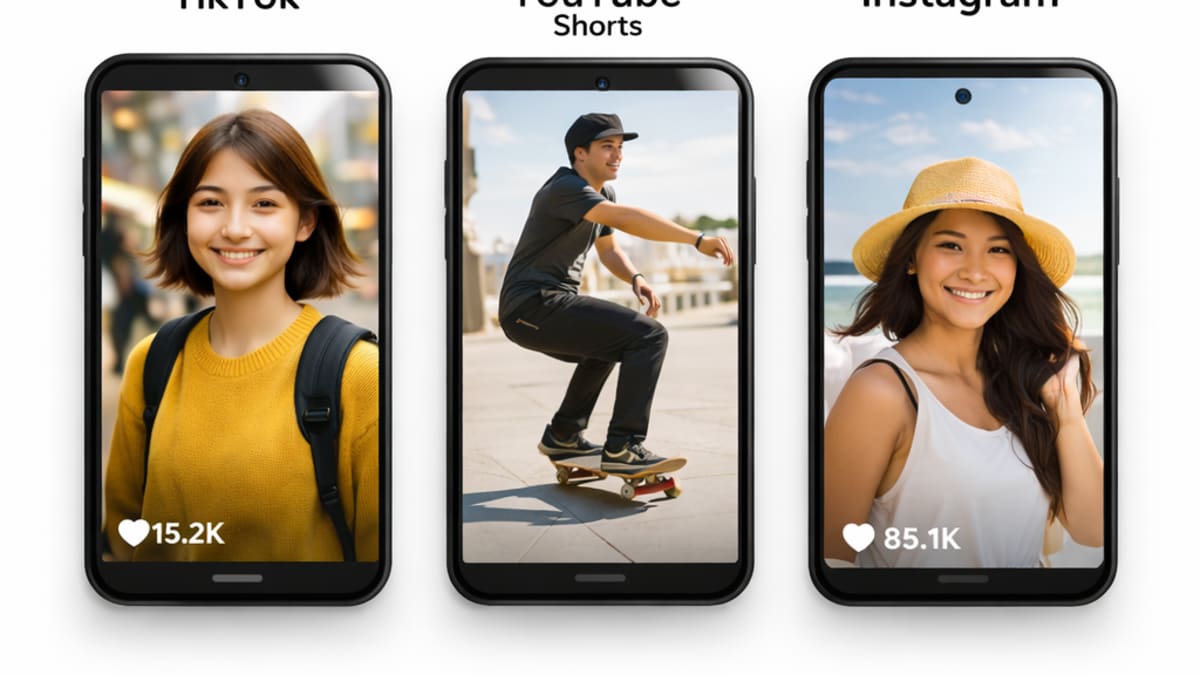
Phones are vertical. Apps are built around that. TikTok proved it. Instagram and YouTube followed.
Vertical videos fill the entire screen. No black bars. No distractions. Just content.
That’s why platforms push them so aggressively. They work.
This shift also changed expectations. Horizontal videos started to feel outdated, even when they were well produced. Vertical became the default.
Tools like Veo 3.1 fit perfectly into this environment. They prioritize speed and volume, not perfection.
Image-to-video AI makes experimentation easier. You can test ideas quickly. Post more often. Learn faster from platform feedback.
That kind of workflow is almost impossible with traditional video production.
Built for Phones From the Start
Vertical video isn’t just horizontal video rotated. Composition works differently.
Veo 3.1 is designed for 9:16 screens. Subjects are framed where your eyes naturally look on a phone.
Faces stay visible. Important elements stay centered. Backgrounds add depth instead of clutter.
This is especially important because many people watch videos without sound. The visuals have to communicate instantly.
Because of this vertical-first approach, there’s no need to fix framing later. What you generate is already optimized for where it will be watched.
Why This Matters for Creators and Marketers
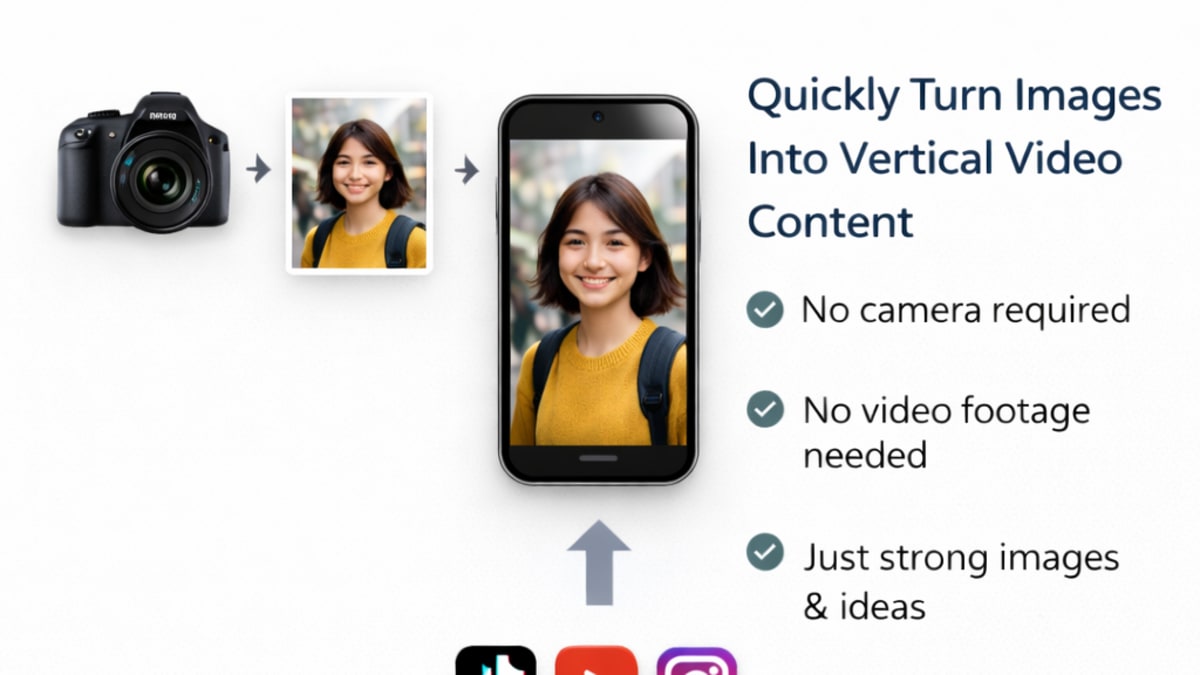
You don’t need a camera.
You don’t need a studio.
You don’t even need video footage.
If you have a strong image and a clear idea, you can create vertical video content that fits modern platforms.
For marketers, this pairs well with planned campaigns. Brands can reuse existing product images instead of starting from scratch.
It’s similar to how smart buyers wait for the right moment to purchase instead of buying impulsively. Sales like the OnePlus Freedom Sale reward planning over chaos. The same mindset applies to content creation.
If you’re curious about that approach, this breakdown explains it well:
https://www.infonest.live/blog/oneplus-freedom-sale-discounts
Less noise. More intention.
Final Thoughts
Google Veo 3.1 is not perfect, and it’s not magic.
But it moves AI video generation in a more practical direction.
Vertical video is no longer optional. Image-based workflows are becoming normal. Visual consistency is finally improving.
Veo 3.1 sits right at the center of these changes.
For creators who want speed without sacrificing visual stability, this update is worth paying attention to.
And for anyone watching where content creation is heading next, this feels like a quiet but meaningful step forward.