What does it mean to set up a PLC?
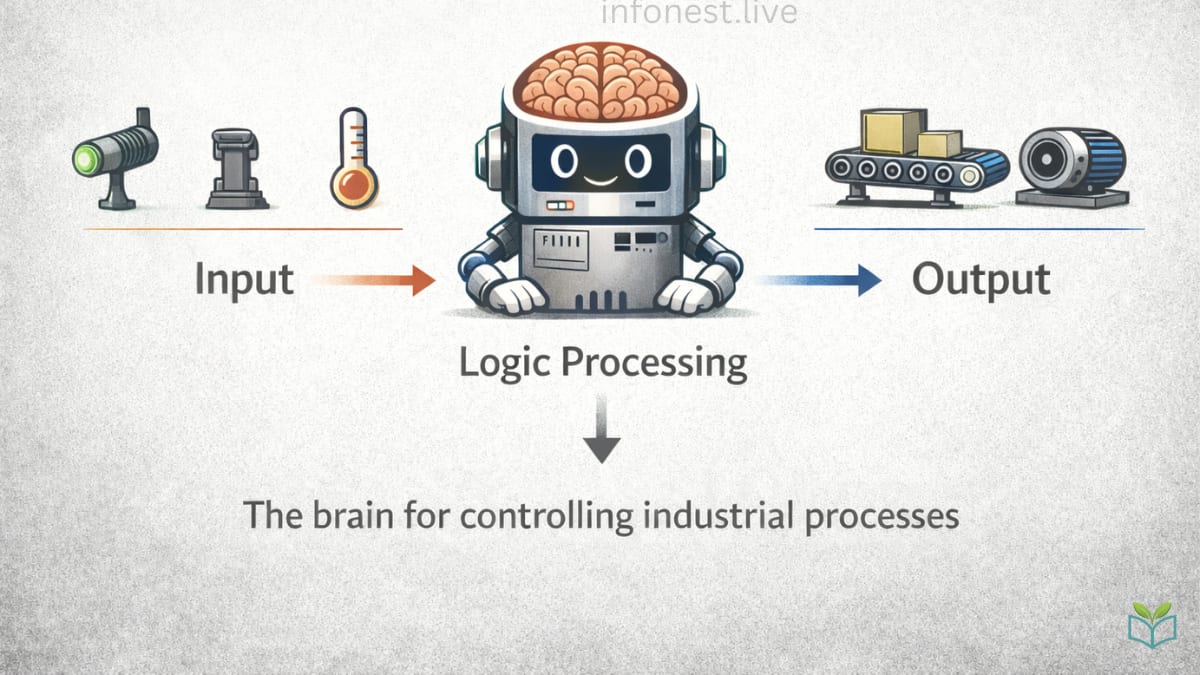
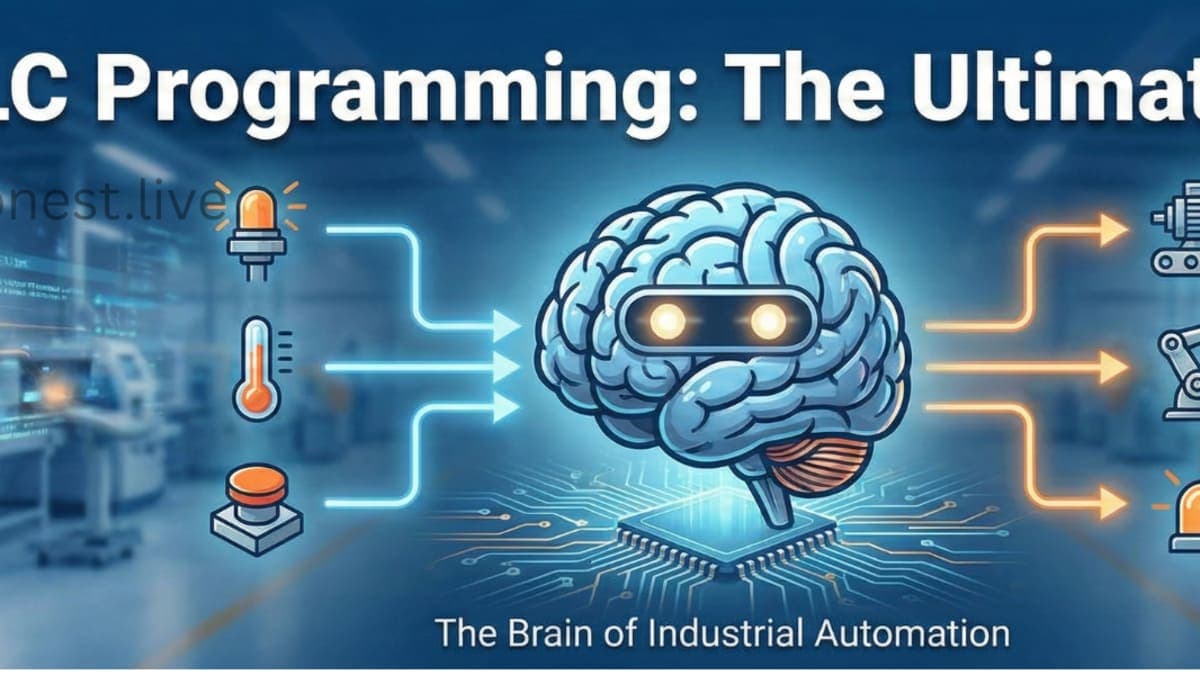
You could say that programming a PLC is like teaching a computer how to think. A PLC is like a brain since it always looks at inputs, processes logic, and turns on outputs. The only thing that makes PLCs different is that they never get weary, lose focus, or make mistakes. When done well, they do the same thing perfectly thousands of times a day.
Programming for PLCs is different from programming for websites and mobile apps since it is made for real-time control. It needs to be able to respond quickly, safely, and in a way that people can trust. PLC programming makes sure that things happen when they should. For instance, it stops a conveyor belt when a safety gate opens or alters the speed of a motor depending on how heavy the load is.
PLC programming works quietly in the background at places like factories, oil refineries, lifts, traffic lights and water treatment plants. Most people don't notice it, but life would come to a halt without it.
The History and Growth of PLC Programming
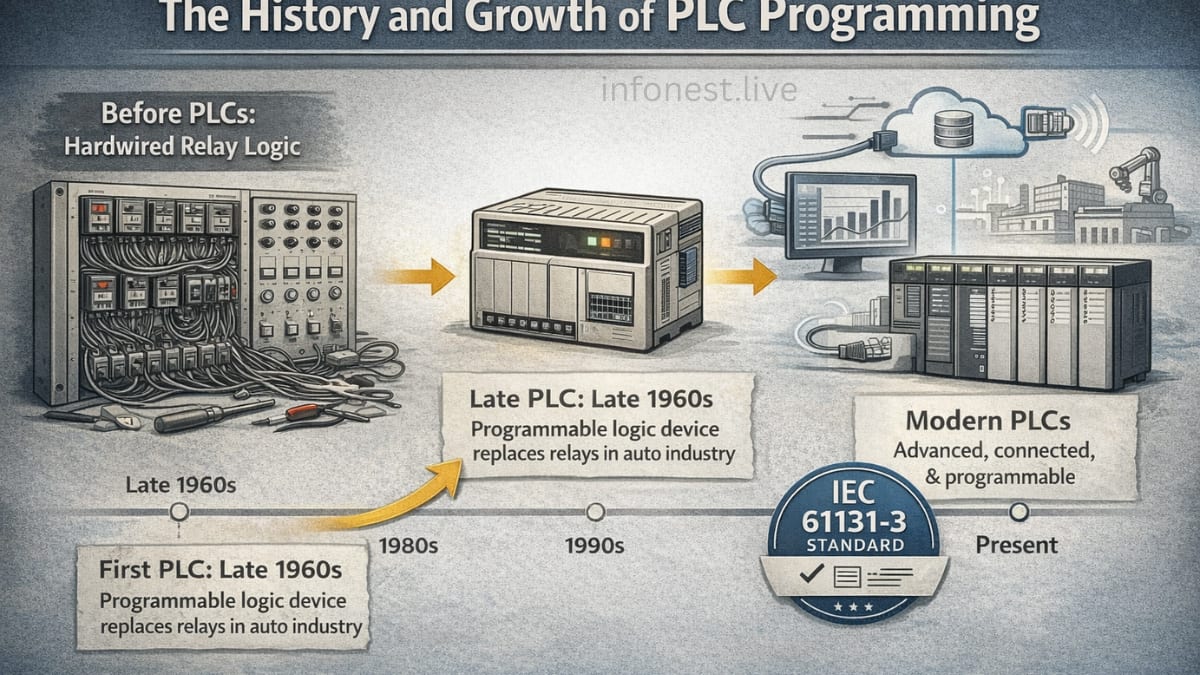
The first PLC, which came out in the late 1960s, fixed this problem in the car industry. Car manufacturers needed control systems that could swiftly adapt to new models. The PLC replaced hundreds of relays with one programmable device, which is how PLC programming came to be.
At first, PLCs were very rudimentary and could only handle basic logic. As time went on, PLCs became more powerful industrial computers because they had greater memory, processing power, and communication. The International Electrotechnical Commission (IEC) came up with the IEC 61131-3 standard for PLC programming languages. This made sure that all of the suppliers spoke the same language (https://www.iec.ch).
PLCs may now connect to high-speed networks, keep a watch on things from a distance, store data, and work with cloud systems. The basic goal is still the same, even with all of this progress: to be able to control industrial operations in a dependable and predictable way.
What is a PLC? Getting to the Point
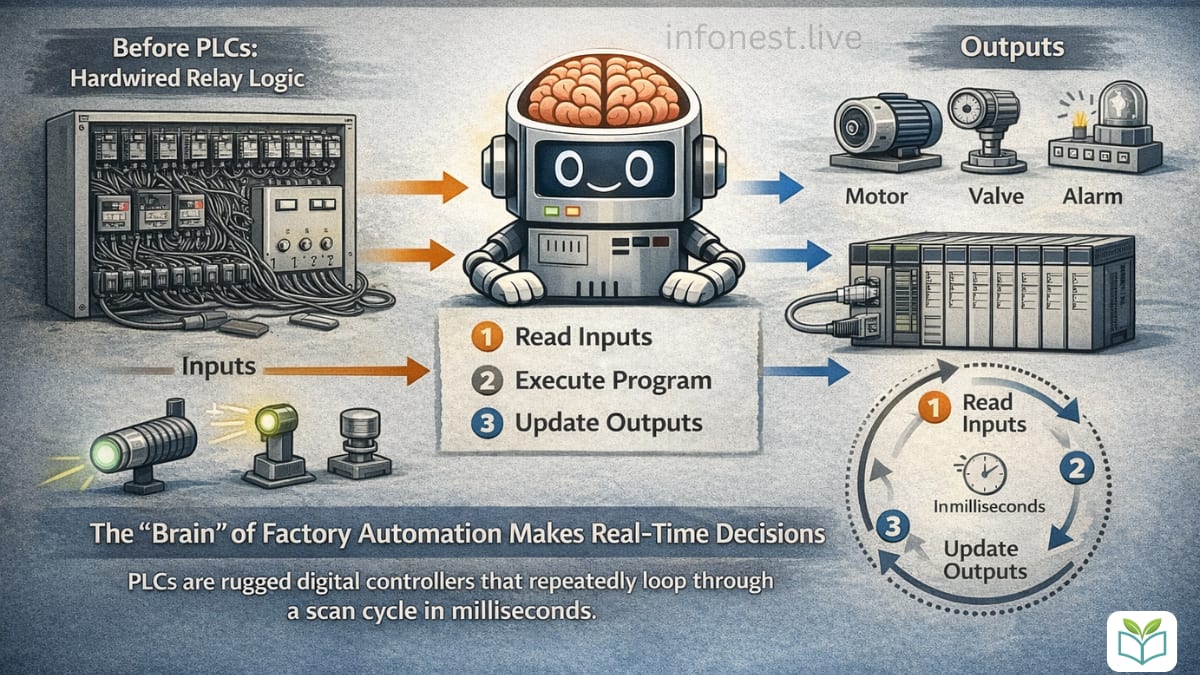
There are always three things a PLC does:
Reads signals that come in
Runs the programmed logic
Updates gadgets that make output
Sensors, push buttons, limit switches, and analogue transmitters are all types of inputs. Outputs control motors, valves, relays, alarms, and other things. When you program a PLC, you tell it what to do with these inputs and outputs.
The scan-based execution method is what sets PLCs apart from normal computers. PLCs run in a loop that never ends, and they can finish a whole cycle in a matter of milliseconds. In places where safety and time are crucial, this behaviour that can be counted on is particularly significant.
A PLC is more than just a controller; it's the brain of automated systems that makes choices. Programming a PLC is what makes it smart.
Why you should learn PLC programming to make factories run on their own
The point of automation is to make things safer, more reliable, and more efficient. That's what programming for PLCs does. Without PLCs, machines would work without knowing what was going on around them and wouldn't be able to adapt to changes in their environment in a smart way.
One of the best things about PLC programming is that it makes things stay the same. There is no room for mistakes or changes because everything is done exactly as planned. This is highly crucial in fields like medicine, food processing, and creating semiconductors, where it's really important to do things perfectly.
Another important reason to learn how to program PLCs is for safety. PLCs can immediately spot harmful circumstances and turn off the system. In situations where danger is high, milliseconds matter, and PLCs do what they say they will do.
Here are several areas that rely heavily on PLC programming:
Putting together and making petrol and oil
Utilities and power
Cleaning up water and sewage
Making buildings work automatically
Automation is still developing all around the world, and PLC programming is a big part of that growth.
The main parts of a PLC system
Knowing how PLCs are built makes it easier to understand how to program them. There are a few main parts that work together in every PLC system.
The CPU (Central Processing Unit) runs the PLC program and does all the thinking. It takes in inputs, checks the conditions, and regulates the outputs. Memory keeps the software and the information that the program requires to work. Non-volatile memory keeps logic even when the power is out.
Input modules get signals from devices in the field, and output modules send commands to actuators. These modules can be either digital or analogue, depending on how they will be used.
The power supply keeps everything running smoothly, and the communication modules let PLCs talk to other PLCs, HMIs, SCADA systems, and corporate networks.
Programming a PLC links all of these parts together to make a single, smart system that operates.
This section explains how PLC programming works, step by step.
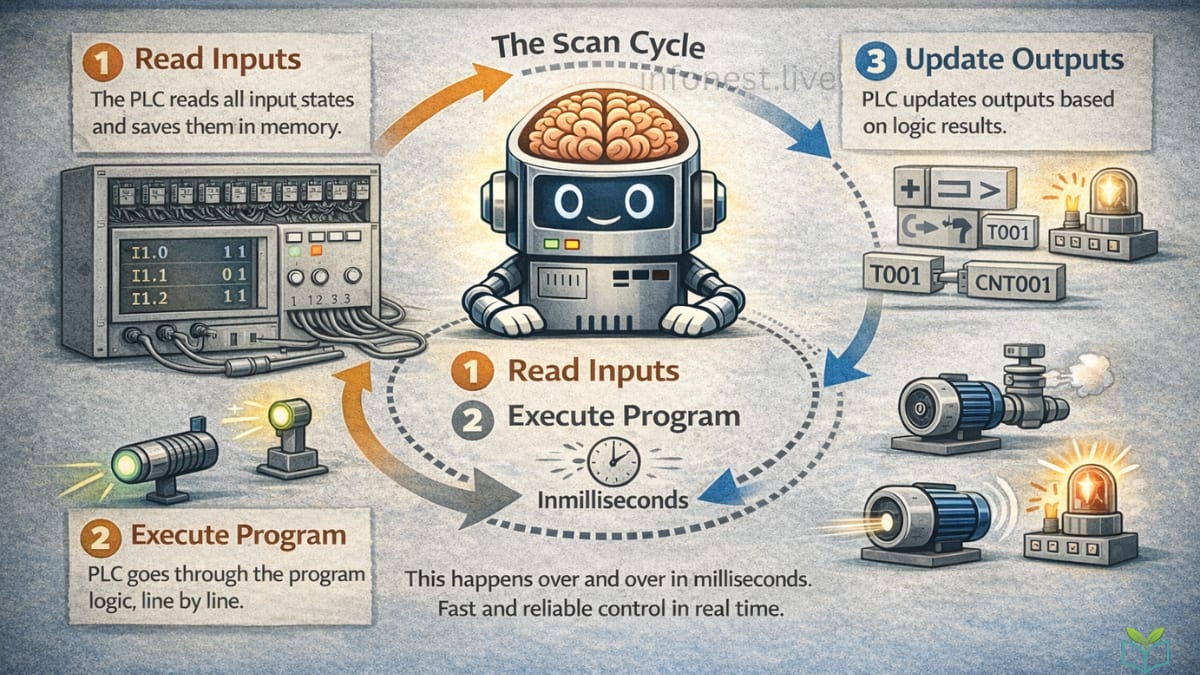
The PLC reads all the input states and saves them in memory. These numbers show us how the procedure is going right now.
After that, the PLC walks through the program logic line by line. This contains math puzzles, comparisons, clocks, counters, and logical procedures.
Finally, the PLC updates all of the output devices based on what the logic says. Indicators alter their state, motors turn on or off, and valves open or close.
This cycle happens over and over, maybe hundreds of times every second. PLC programming is helpful for controlling objects in real time since it is fast and reliable.
What IEC 61131-3 Says About Languages for PLC Programming
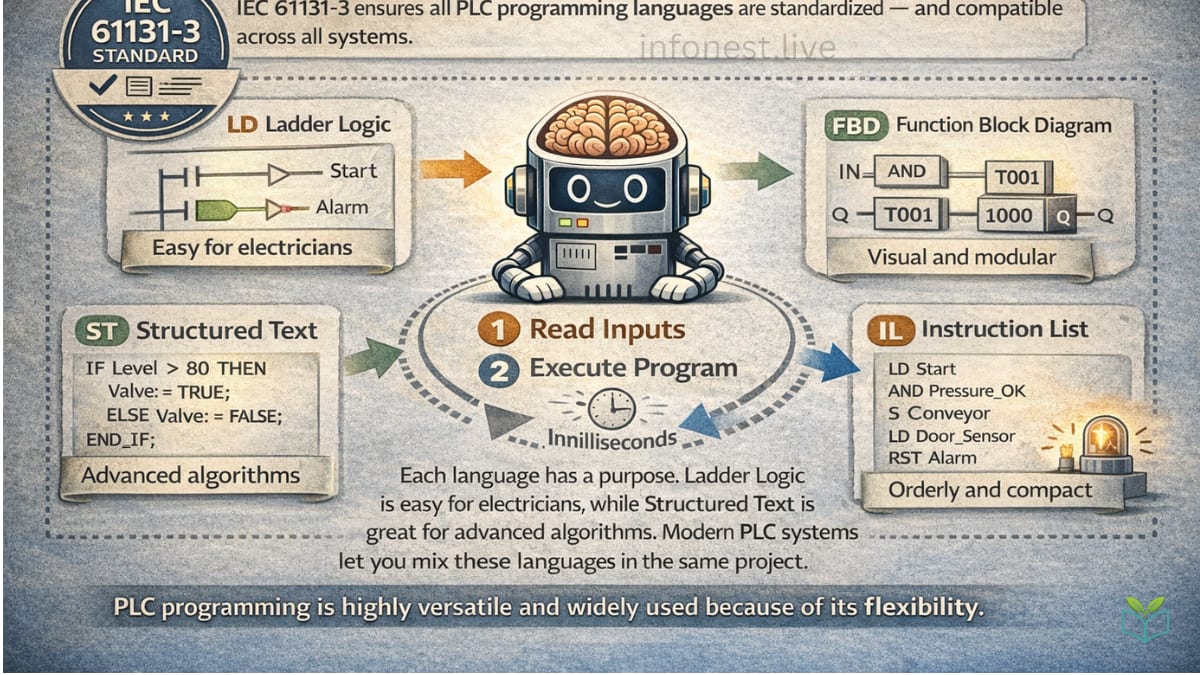
The most common languages are:
Logic for Ladders
Block Function Diagram
Text that is put in order
Chart of Functions in Order
A List of Directions
Every language has a reason for being. Ladder Logic is easy for electrical technicians to understand, and Structured Text is great for complex algorithms. On most recent PLC systems, you can use more than one language in the same project.
Because it is so flexible, PLC programming is very helpful and popular.
Ladder Logic is the most crucial thing to know about PLC programming
The most common programming language for PLCs is Ladder Logic. People like it because it looks a lot like old electrical relay diagrams.
Programs have steps, and reasoning travels from the left to the right. You can think of inputs as wires and outputs as coils.
Timers, counters, and function blocks give you more choices.
Ladder logic is straightforward to correct because it is based on how electrical systems work in real life.
Ladder diagrams are easy for even technicians who don't know much about programming to understand and change.
Ladder logic is the most important part of PLC programming, even though it was first introduced decades ago. This is because it is so straightforward to use.
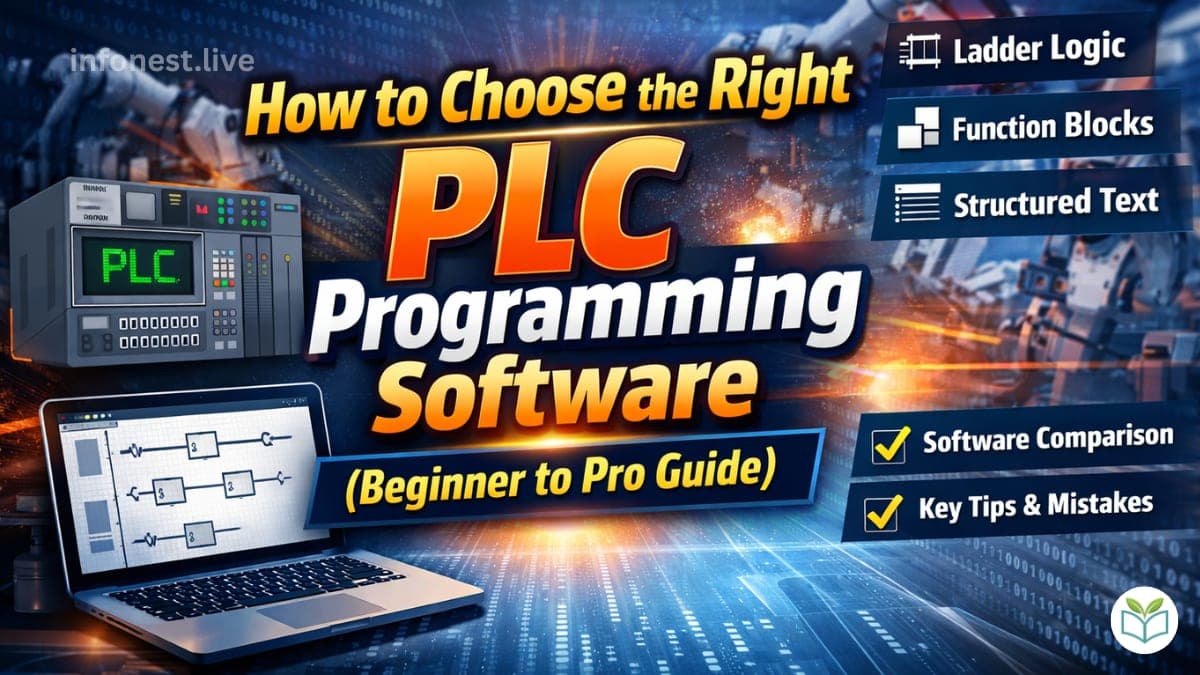
How to Pick the Best PLC Programming Software
The software used to program PLCs has an effect on how well they perform. Each PLC maker has its own programming environment that comes with its own set of features, functions, and limitations.
Here are some factors to think about when picking the right software:
Works with hardware
How hard the job is
Tools for testing and making things work
The ability to grow and get bigger in the future
If you choose the wrong platform, it could take longer to create and cost more to keep up. This helpful post on how to pick PLC programming software goes into a lot of depth about how to look at and pick the best tools.
You can run diagnostics in real time, access it from anywhere, and connect it to other corporate systems with modern PLC software. This makes it a deliberate option rather than merely a technical afterthought.
Famous PLC brands and manufacturers
A few significant corporations are in charge of the PLC market. Siemens (https://www.siemens.com/automation) is a large company that conducts a lot of work for other large companies in Europe. Allen-Bradley (Rockwell Automation) is the top firm in North America.
Omron, Schneider Electric, and Mitsubishi are other key players. The underlying ideas underpinning PLC programming are the same for all of them, even though the interfaces are different.
What PLC programming is used for in the real world
PLC programming controls everything, from tiny devices to big enterprises. PLC logic is needed for all of these things to work: bottling facilities, packing systems, assembly lines, and robotic cells.
Outside of production, PLCs operate lifts, HVAC systems, traffic, power distribution, and systems that use renewable energy. PLC programming is very important in any situation where automation needs to be reliable.
The Growth of PLC Programming, AIoT, and IoT
Digital ecosystems and PLC programming are no longer separate. Artificial Intelligence of Things, or AIoT, is what today's automation systems employ to link PLCs to IoT platforms and AI.
IoT devices gather information, PLCs control things in real time, and AI algorithms look for patterns to make things work better and plan maintenance. This confluence is transforming the way factories work and the way smart factories work.
This guide to the Internet of Things, AI, and AIoT goes into great detail about this change, focusing on how PLC-driven systems are becoming more intelligent and self-sufficient (https://www.infonest.live/blog/iot-artificial-intelligence-aiot-explained).
Using current visualising tools and programming PLCs
More and more people are using PLC automation data outside of control rooms. It runs dashboards, simulations, and AI-powered visualisation tools that are used for reporting, training, and marketing.
These days, powerful AI algorithms can turn photographs and data into moving pictures. Google VEO 3.1 can turn photos into vertical films. This is an example of how automated insights may be conveyed in current digital media (https://www.infonest.live/blog/google-veo-3-1-vertical-videos-from-images).
This trend illustrates that PLC programming now affects both how machines perform and how operational intelligence is disseminated.
PLC programming vs other programming approaches
Programming PLCs is very different from programming other things. It puts safety, uptime, and determinism ahead of abstraction and user interfaces.
PLCs are easier to keep up with and more reliable than microcontrollers.
PLCs are more about control than SCADA systems, which are more about showing things.
PLCs are easier to keep up with and more reliable than microcontrollers.
What You Should Know to Work as a PLC Programmer
Good PLC programmers can think logically and employ processes in the actual world. You need to know the basics of electricity, how to fix problems, and how to write effective documentation.
It is just as important to know how to program machines as it is to know how they work.
Job Opportunities and How Much You Can Make
PLC programming is a part of several vocations, such as automation engineer, controls engineer, and maintenance specialist. There is a lot of demand all around the world, and the compensation is good, and the job is stable for a long time.
There will always be a need for skilled PLC programmers as automation grows.
Problems and Limits of Programming PLCs
PLC systems can be very expensive and only work with some vendors. You need to spend some time learning how to use different platforms, but the main premise stays the same.
The good things are considerably bigger than the bad things, even with these challenges.
How PLC programming may change in the future
As Industry 4.0 grows, so does PLC programming. More and more people are using cloud platforms, AI, and advanced analytics.
New technologies are making PLCs better instead of replacing them. This indicates that PLC programming will be important for a long time to come.
Last words
Programming PLCs is what makes modern automation work. It makes sure that machines work securely, well, and smartly, from the factory floor to smart infrastructure. PLC programming is still changing as companies move towards digital transformation. This shows that this expertise will last into the future, not simply the past.
Frequently asked questions (FAQs)
1. Is it easy for people who are new to PLC programming to learn?
Yes, especially Ladder Logic, which is designed to be simple to learn.
2. Do I need to know how to write code in order to learn how to program PLCs?
You don't need to know a lot about logic or electricity to get started.
3. Is PLC programming still necessary?
Yes, demand is still going up all across the world.
4. Can PLCs operate with AI and IoT?
Yes, for sure. PLCs are becoming a key aspect of AIoT systems.
5. What kinds of businesses use PLC programming the most?
Automation for buildings, utilities, energy, and industry.